Letter Details
The realization of self begins at an age when trust weakens—in people, in culture, in place, in religion, in familiar systems and habits. The realization of self, however, also happens at the moment before the hardening. For we are at our most flexible, yet far from redemption in these moments. In the inelasticity of a time post-hardening, what happens to tomorrow’s boys raised in yesterday’s remains?
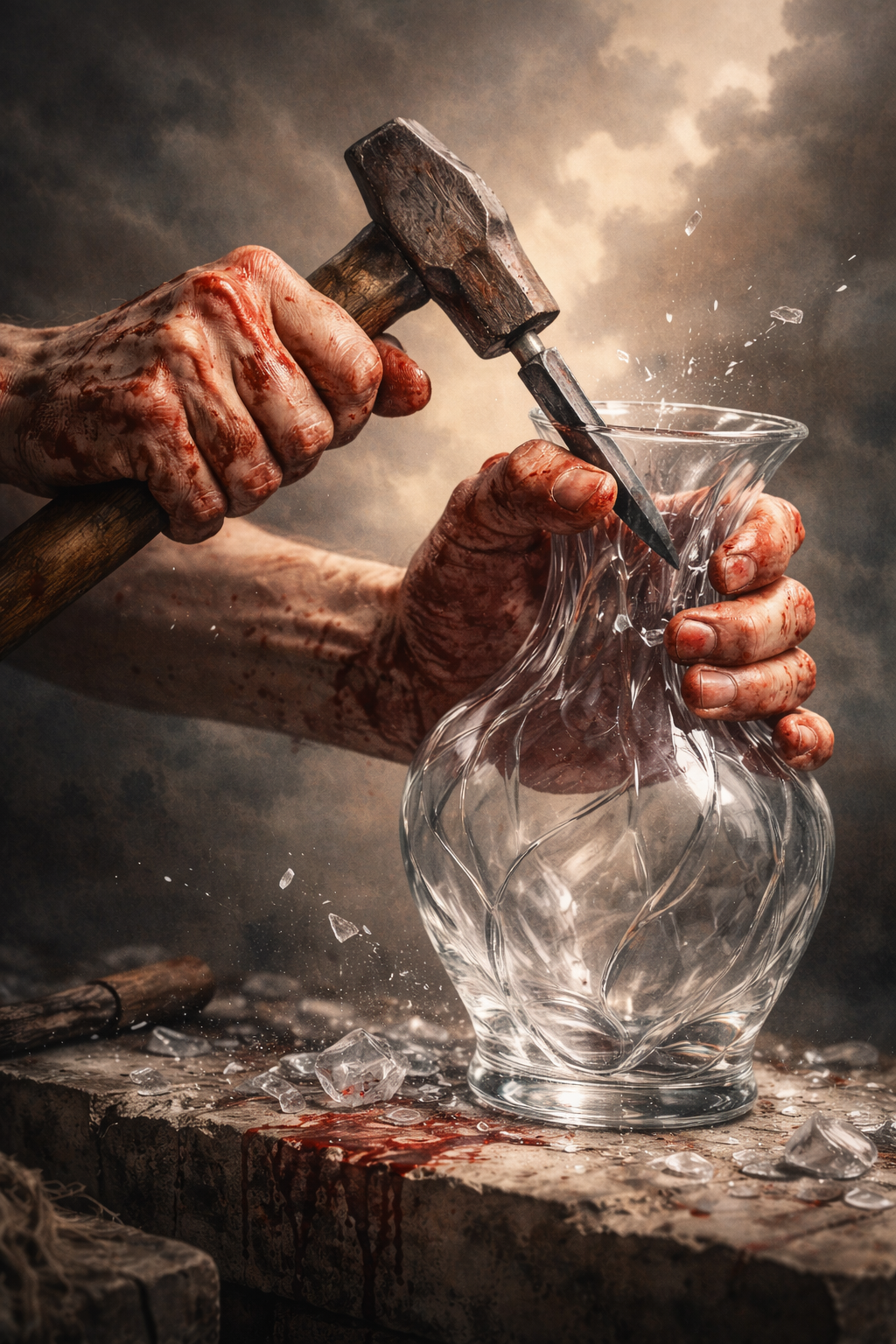
The Calcification of Flesh
He forgot his name before he was born.
At birth, he was, at best, the first son—
duties, “do this,” his mom never said.
But do, he did.
Sagging jeans, graphic tees, and Gucci slides,
dug from the depths of his Ghana Must Go bag.
He knew fugazzi
before his reflection met him.
Up at dawn.
Arrested by night.
Bailed by noon again.
Thus, Omo Boy learns freedom
before instruction.
“Spare the rod and spoil the child,”
Daddy would preach—he’s a deacon, you see.
But if the spoiling child can fend for five and four,
what use is the rod?
Spare them for Ada.
Yes—she must be fit for marriage.
Omo Boy must make am, oh.
Therefore, before he learns himself,
he must learn the ropes.
Before he loves,
he must learn to fight.
The trenches are unforgiving anyway.
Key Highlights
- Identity formation
- trust erosion
- duty before desire
- polish before personhood
- labor as love
- emotional hardening
- generational pressure
- struggle and sacrifice
- fragility of selfhood
- survival under expectation
- unfinished self
- societal shaping of boys into men
- introspection
- resilience
- moral and psychological calcification
Before he learns the dance of dabbling,
he must marry duty
before diligence.
And what is labour, anyway?
Is it not the love that men give?
Who loves without reward—
the mother who took before she gave?
This one, a doctor.
The other, the daughter in darling
but mother in mode.
Anyway, Omo Boy wears suits now.
He has learnt polish
before person.
Yet, when he looks in the mirror—
where many see Prada,
not Fugazzi this time—
he still sees a boy
who never had a chance to grow.
A thug who classed it up.
He changes his suits
as easily as his moods change.
Mama, I made it.
But who made him?
Is it Mama?
Is it Daddy?
Is it the Man?
Or is it every hand
that took
what was never given?
Who knows him,
this strange man
in suits and suave?