Letter Details
A systems-level meditation on competition, rivalry, and the hidden architecture of games. The piece examines how binary opposition and zero-sum dynamics can confine actors within reactive cycles, where winning becomes structurally inseparable from loss. Through philosophical, metaphor-rich prose, it explores the tension between competition and monopoly, revealing the paradoxes of strategy, power, and the quiet costs of playing the game itself.
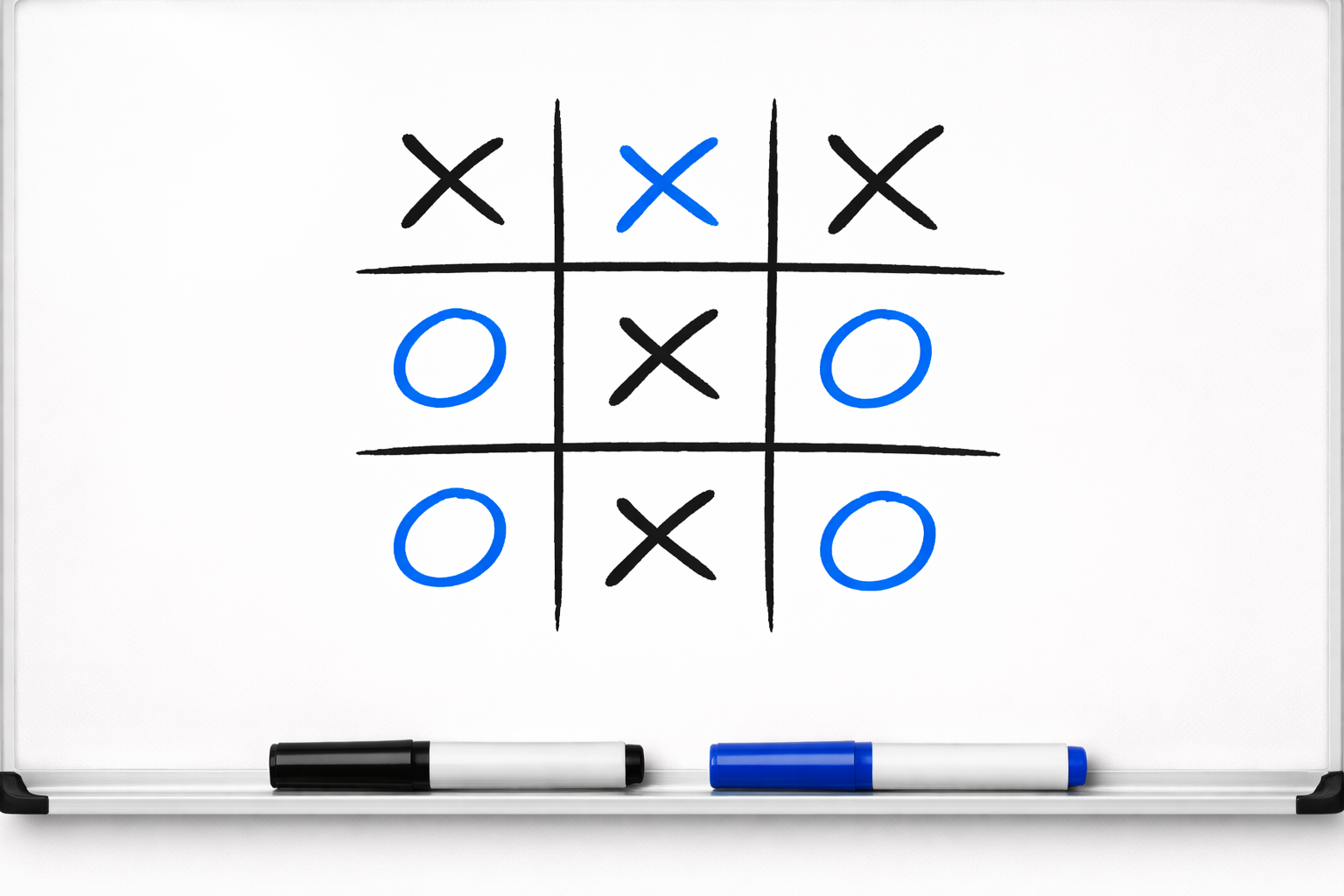
Game of Losses
You start out playing to win. But if it’s a game, it is doomed to invite a twin.
Twin players mean competition. Twin players mean they move zig, hence you zag.
Twin players mean you choose so they lose. Twin players mean you are not in a duality
The fact is that you are a binary face of one—as one as a coin.
In stopping their rise, you stay locked, landwise. In fighting their might, you stay lightweight. No more than a paperweight.
The twin game means you’re confined to a board, a rail forever outsourced to the twin opponent’s moves.
And even if there is the adrenaline of communal battering, and even when you are hailed winner to the chagrin of your opponent, a game is a game.
And because the attack against deviation by convergence has diverted you from your monopoly, rather—in the end, it is a game of losses and winners.
Key Highlights
- Examines competition through systems and game theory lens
- Explores zero-sum dynamics and binary opposition
- Critiques rivalry as a structural confinement mechanism
- Reframes monopoly versus competitive positioning
- Uses metaphor to analyze power and incentives
- Reflective philosophical prose on strategy and loss
- Highlights paradox of winning within limiting systems
Yet, having played a game in the name of competition, you’ve lost the play at coronation.
You forfeited kingship for the many ships of she, him, they and them.